 SoupWise
Why I'm Switching to Whole Spices in 2026 (and You Should Too)
I'll admit it: by the time February rolls around, half of my New Year's resolutions are already fading. But if there's one small kitchen upgrade I've actually managed to keep this year, it's this: I cleared out my spice cabinet, tossed the dusty powders, and made a deliberate move toward whole spices. I'm not judging anyone whose ground cumin has been sitting untouched since 2024. I was right there with you. Still, there's something deeply satisfying about taking stock of a pantry and treating spices less like forgotten clutter and more like fresh, aromatic ingredients.
Whole spices bring a few immediate advantages. For one, they look fantastic on a shelf, with their varied shapes, textures, and colors. For another, they stay fresh far longer than their powdered counterparts. A whole seed, pod, or berry has far less surface area exposed to air, so its aromatic oils remain more stable over time. That means you can buy smaller quantities without worrying that they'll go stale before you use them. They also offer real flexibility. Some recipes call for whole spices, whether it's a slowly simmered broth or a pot of chai. Others want the ground version. When you keep whole spices on hand, you can decide what form you need on any given day.
The real reason I've become a whole-spice convert, though, is the flavor transformation that happens with a quick stovetop toast. Toasting heats the volatile flavor compounds inside spices, changing their structure and helping them recombine into new, more complex aromas. Cumin deepens, coriander brightens, star anise softens, and cloves grow rounder and richer. I saw this firsthand when I made a big batch of chili using toasted whole spices. The finished pot had a layered, almost perfumed warmth that I never got from preground powder alone. Toasting also dries the spices slightly, which makes them easier to grind into a fine, even powder.
You might wonder why you can't simply toast ground spices instead. There are a couple of solid reasons to avoid that shortcut. First, unless you ground the spice yourself moments ago, you probably don't know how fresh it really is. Ground spices from a store can sit on shelves or in warehouses for months before you open the jar. Second, because ground spices have dramatically more surface area than whole ones, they burn more easily. They also release their volatile compounds too quickly, which means the flavor you're hoping to build can vanish into the air before it ever reaches the pot. Whole spices, by contrast, hold onto those compounds until you're ready to crush them.
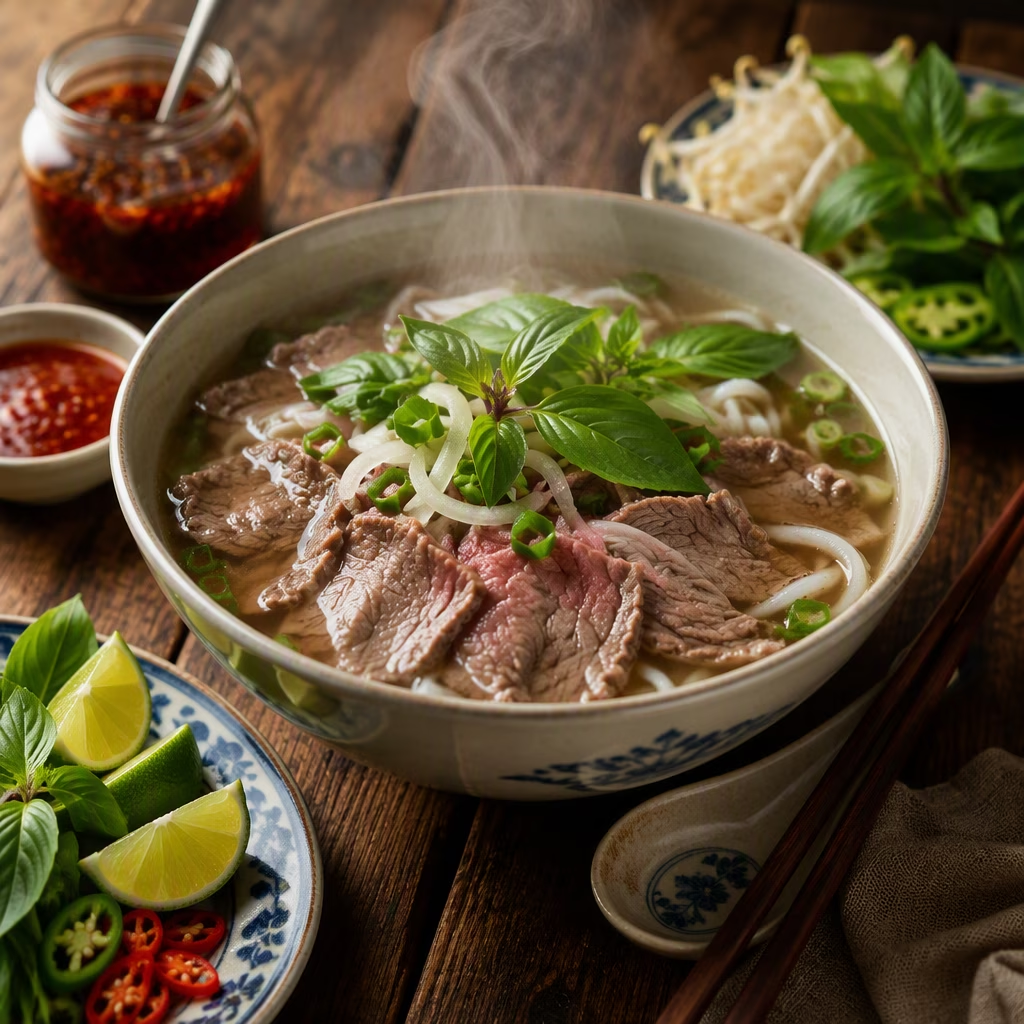
The toasting method itself is almost embarrassingly simple. Pour the whole spices into a small, dry skillet. Set it over medium heat. Stir and toss them continuously until they become fragrant. That's it. Your nose is the best timer here: the moment you catch a strong, warm scent rising from the pan, they're ready. Remove them quickly so they don't scorch, then let them cool before grinding. I also like to remember that toasting whole spices is worthwhile even if they will be used whole. A pho broth, a simmered curry, or a pot of masala chai all benefit from spices that have been gently awakened in a hot pan first.
The only real drawback is that whole spices require a tool for grinding. A cheap electric coffee grinder works beautifully, and I keep one exclusively for spices so it doesn't carry over coffee oils. A sturdy mortar and pestle is another excellent option, though it asks for a little more elbow grease. Either purchase is well worth the investment. Once you have a small collection of whole spices and a way to crush them, a wide world of freshly ground mixtures opens up. You can make your own blends for roasted chicken wings, grilled kebabs, or even a cumin-laced chickpea salad. You can grind garam masala to order, mix a custom chili powder, or crush toasted fennel seeds for a weeknight pasta.
Here's a quick comparison of what I've noticed in my own kitchen:
| Consideration | Whole Spices | Pre-ground Spices |
|---|---|---|
| Shelf life | Several years if stored properly | Often 6 months to 1 year before flavor fades |
| Aroma intensity | High, especially after toasting | Lower and unpredictable |
| Flexibility | Can be used whole or ground | Limited to ground form only |
| Risk of burning | Lower due to less surface area | Higher due to fine texture |
| Tool requirement | Needs grinder or mortar | None |
I know it's easy to reach for the budget-friendly plastic jar of ground spice at the store. I've done it plenty of times. Those oversized containers can look like monuments to flavor, but in reality they often end up mostly untouched at the back of a cabinet. By switching to smaller amounts of whole spices, I've saved space, reduced waste, and made my everyday cooking noticeably better. The ritual of toasting and grinding takes only a few extra minutes, and it turns an ordinary Tuesday dinner into something that smells and tastes far more deliberate.
So if you're still looking for a resolution that's easy to keep, consider this one: clear out the stale powders, stock a few jars of whole spices, and make toasting part of your routine. Your future chili, broth, tea, and roasted everything will thank you.