 SoupWise
The Unassuming Hero: A Bay Leaf’s Journey from Myth to Kitchen
In a quiet pantry corner, a bag of bay leaves sat forgotten, its contents older than the head chef himself. One afternoon, a young cook named Elena pulled it out, skeptical. She had always questioned why every stock and stew demanded these brittle leaves. “They taste like nothing,” she muttered, echoing a sentiment shared by many. Little did she know that this unassuming leaf held a thousand-year-old secret, one that would soon transform her cooking forever.
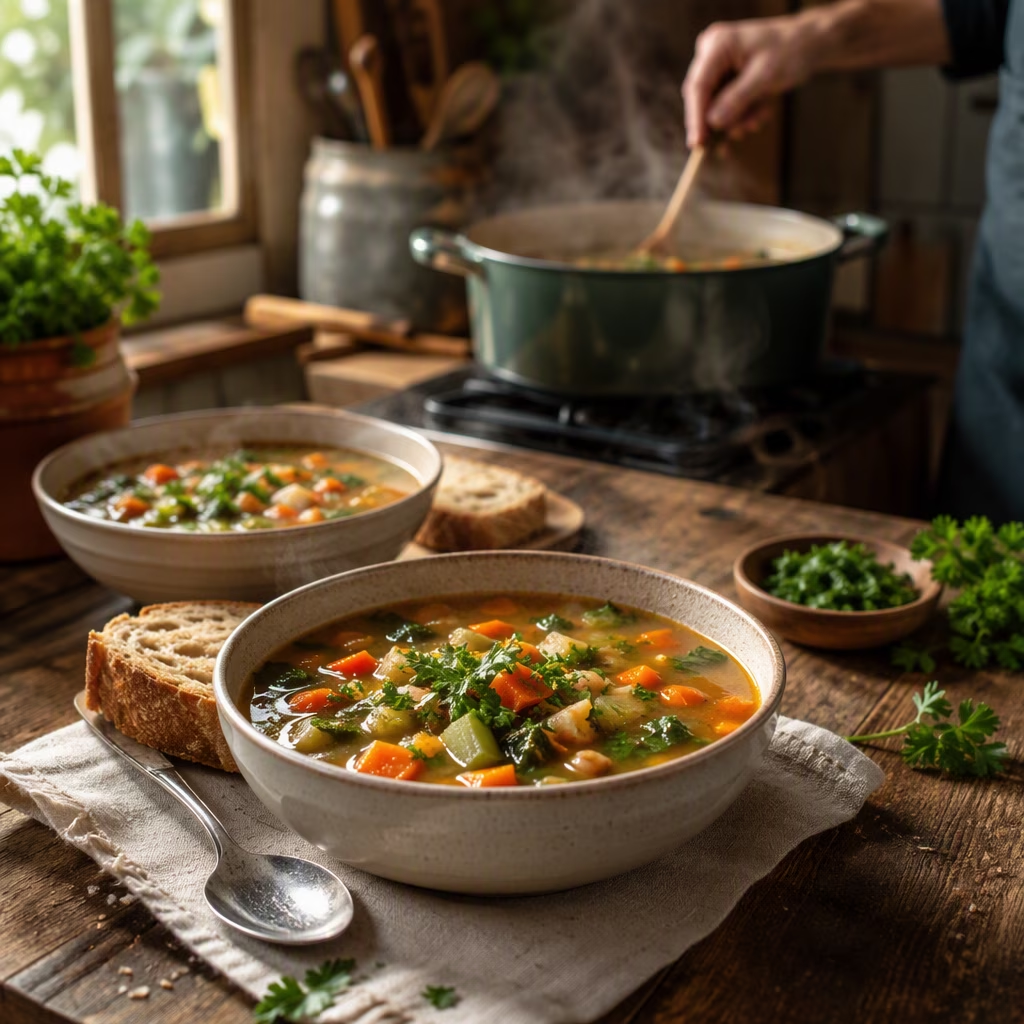
Elena’s mentor, Chef Marco, noticed her doubt. He plucked a leaf from the jar, crushed it between his fingers, and held it under her nose. Suddenly, a complex perfume burst forth—hints of mint, a whisper of thyme, a ghost of oregano, and a subtle resonance of coriander and clove. It was not the dull wallflower she had assumed. Marco explained that bay is more than an herb; it is a spice, a team player that amplifies warm, meaty flavors just as allspice supports cinnamon and nutmeg. The lesson was clear: treat bay with respect, and it would sing.
The story of bay leaves, however, began long before any kitchen existed. Their journey traces back to the sun-drenched Mediterranean, near modern-day Turkey, where the laurel tree reigned. Ancient Greeks wove its leaves into wreaths for Olympic champions—a tradition born from a dramatic myth. As legend tells, the god Apollo pursued the nymph Daphne until the Earth spirit Gaea shielded her by turning her into a laurel tree. Stricken with remorse, Apollo declared the tree sacred. From then on, laurel branches symbolized honor, crowned not just athletes but also poets and artists. The very word “laureate” echoes this heritage, and the Oracle of Delphi even inhaled laurel smoke to induce visions.
Centuries later, during the Middle Ages, bay leaves found a humbler but no less vital role. Their lauric acid made them effective insecticides, driving moths away from precious textiles, while folk medicine relied on them to balance the body’s humors. In the evolving kitchens of Renaissance Europe, cooks discovered that these gentle, savory leaves paired perfectly with roast meats and enriched the burgeoning repertoire of stocks and sauces. The practice stuck, and the method of using bay leaves has remained remarkably unchanged since.
Elena’s education continued as Marco revealed a common pitfall: stale leaves. Many home cooks keep the same dusty bag for years, wondering why their bay adds no taste. Marco’s rule was simple—replace your bay annually. Fresh or properly stored dried leaves burst with potency, while old, brittle ones belong in dresser drawers as moth repellants, not in the pot. He pointed out that American markets mainly stock bay from Turkey or California. Turkish bay, he noted, is subtler and more nuanced, ideal for soups and delicate sauces. Californian bay, by contrast, is robust and assertive, perfect for hearty bean dishes and rich marinades.
The chef then walked her through a world of culinary applications beyond European stews. In Indian kitchens, bay leaf is a staple in garam masala, mingling with black pepper and cinnamon to create warming depth. Filipino adobo—a tangy vinegar-braised chicken, pork, or fish—relies heavily on bay for its signature aromatic backbone. Even high-end restaurants have embraced the leaf, steeping it in custards like ice cream and crème brûlée. These sweet preparations amplify bay’s clove-like eugenol notes, offering an educational taste of its true character, stripped of competing flavors.
Crucially, bay leaves are always used whole, not minced like basil. They are spice-team leaders that need time and moisture to release their magic. Your task when cooking with bay is simple: drop a leaf or two into a simmering liquid and let it work in the background, like the drummer who drives a band’s rhythm without seeking the spotlight. After a minute of steeping, the difference becomes evident—a harmonious hum that elevates every other ingredient.
That evening, Elena prepared a simple lentil stew. She heated oil, bloomed cumin seeds, added garlic, and then slipped in two fresh bay leaves. As the broth bubbled, the kitchen filled with an earthy, comforting aroma. She tasted the dish and finally understood. The bay had not shouted; it had whispered, but its presence had woven the flavors into a seamless whole. From that night on, she never underestimated the bay leaf again. It was no longer the forgotten bag in the pantry but a bridge between myth and meal, a tiny leaf with an eternal story.