 SoupWise
The Overlooked Magic of Dill Seeds: From Old World Kitchens to Modern Tables
It began with a simple mistake in a bustling Eastern European market, sometime in the early spring of 2026. A young cook, browsing for fresh dill weed to finish a batch of beetroot soup, accidentally grabbed a small paper bag filled with unfamiliar, flat pods. The vendor chuckled knowingly and said, “Those are the real treasure.” That moment of serendipity cracked open a door to a culinary dimension most home cooks rarely enter—the world of dill seeds. For those who grew up worshipping the feathery, lemon-bright fronds of dill, the seed is like a forgotten letter from a beloved friend: the handwriting is similar, the emotion is different, yet it carries a deeper, more mysterious message.
Dill seeds are immediately recognizable once you know what to look for. They are wide, flat, tear-shaped pods with pale brown rims and dark, oak-like centers, as if each one were a tiny, ancient shield carved from the forest floor. If you chew a few raw, the first flavor to greet your tongue is a surprising doppelgänger of caraway—earthy, slightly camphorous—but with a much lighter footstep, and a whisper of the herbaceous brightness that makes dill weed so beloved. The experience is less a shout and more an echo from another century. The camphor notes in particular conjure visions of musty Russian caravans creaking across the steppe, with iron pots bubbling over open fires, filling the air with something decidedly Old Country. Spices are the most affordable form of time travel, and dill seed is a ticket stamped for a world where food was medicine, flavour was hard-won, and nothing was wasted.
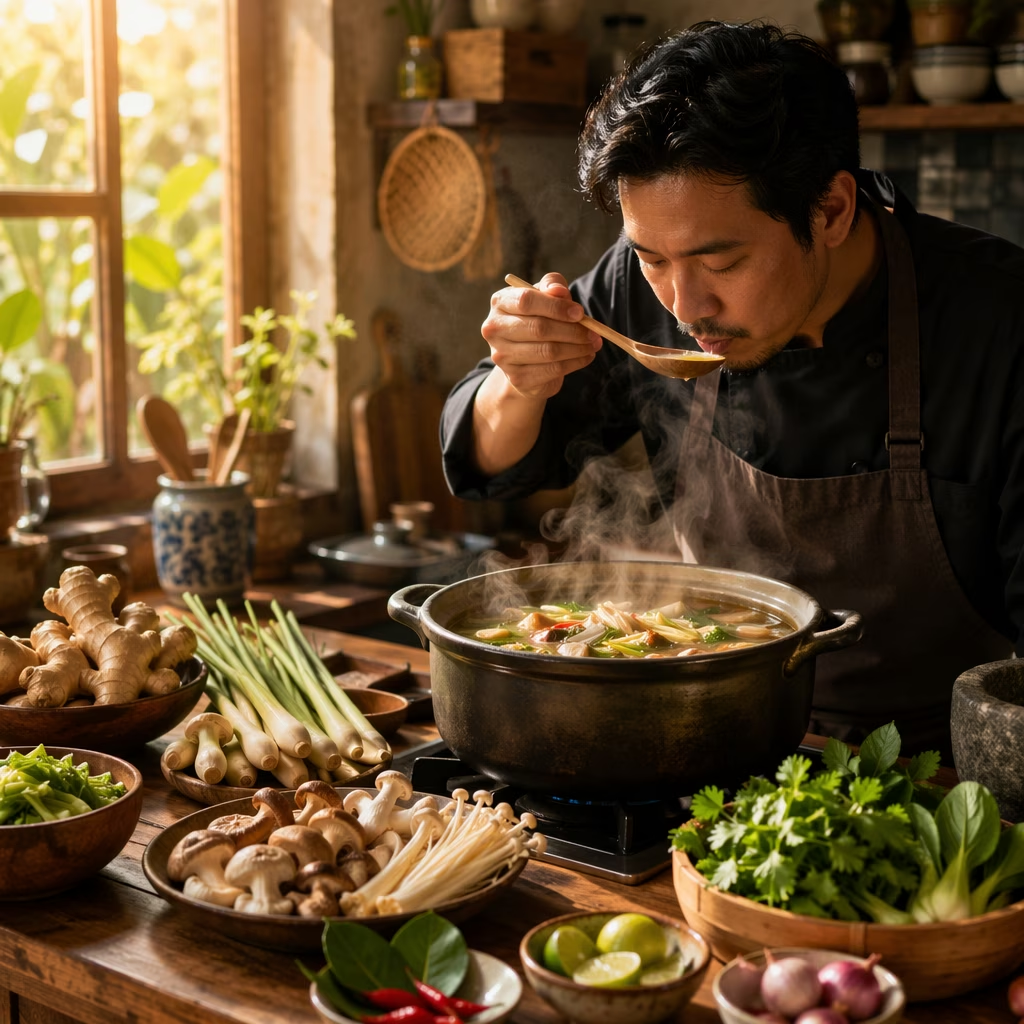
Botanically, dill belongs to the Apiaceae family—a sprawling clan that includes caraway, anise, chervil, coriander, parsley, and carrots. This is why the stems of parsley, carrot, and dill often taste disconcertingly similar: they share a web of aromatic compounds that nature has lightly remixed. The family tree is not just a botanical curio; it is a culinary roadmap. Dill seed acts as a harmonizer, drawing out the best in its relatives. The old gardeners’ wisdom, “what grows together goes together,” becomes a seasoning mantra. Add dill seed to a simple shredded carrot salad with coriander and lemon, and suddenly the carrots’ earthy sweetness finds a resonant, camphor-tinged depth. The seed completes the circle that the root vegetable begins, like the bass note that makes a melody feel whole.
The varied cuisines of Eastern Europe just beg for dill seeds—this is their ancestral home before they meandered to the Mediterranean and Asia. Our cook discovered that the seeds are the secret engine behind many dishes that Western cooks often overlook. They perform best with hearty root vegetables, both raw and cooked. A pot of braised cabbage, that famously sulfurous vegetable, loses its funky edges and gains a dark, comforting warmth when dill seeds are thrown in early. The same transformation happens with meaty eggplant or fatty roast meats. In fact, the seeds’ camphorous properties were long used as a folk remedy to improve digestion, especially after rich meals. The line between food and medicine was, and still is, blurred in the most honest kitchens. For centuries, grandmothers from Lviv to Vilnius would drop a pinch of dill seeds into a heavy pork stew not only for taste, but to ease the stomach afterward—a proto-digestive woven into the very fabric of the recipe.
Like many hearty, grounding foods, dill seeds crave acidity. While fresh dill weed brings its own softly sour undertone, a splash of lemon juice or a whisper of vinegar works beautifully. One of the most brilliant applications is in pickle brines: not only for cucumbers, but for beets, carrots, and even pickled fish. Along with vinegar, dill seeds help to cut any unwelcome fishy funkiness, making preserved herring or mackerel taste clean and vibrant. It’s a trick that brightens the cold appetizer table as effectively as a squeeze of citrus brightens a winter day.
But dill seeds are not prisoners of Eastern Europe. Following the well-worn paths of Eurasian trade, they hitched a ride into Indian kitchens, where they are treated with a reverence all their own. There, the seeds are cooked in dal with lentils or fried with other spices as a tadka—a last-minute sizzling garnish that awakens the dish just before serving. The Indian use of dill seed as a digestive aid for legumes is another nod to the folk medicine roots, though in 2026 chefs in Mumbai and London alike are now experimenting with dill seed tadkas on roasted pumpkin soups or charred broccoli, bridging continents in a single skillet.
Knowing when to add dill seeds is the simplest way to control their personality. They don’t need to be ground; their high surface area and thin coating mean they plump up and become toothsome in hot liquids, releasing their essence gradually like tiny flavour capsules. Add them at the start of a long-simmered soup or braise and they will mellow, giving a full, rounded earthiness that supports other ingredients. Add them toward the end and they retain a pungent, almost medicinal pop. The most elegant trick our cook adopted was to use them early in cooking and then refresh the dish with a handful of fresh dill weed just before serving. This dual-phase approach is the soul of a classic borscht—spelled without the ‘t’, as there is none in the Cyrillic—where the seeds lend a quiet, ancient backbone to the beets and beef, while the fresh herb revives the bowl with a chlorophyll spark. And, naturally, such a borscht is merely an excuse to eat what some might call unforgivable amounts of sour cream.
As a general guide, think of dill seeds as a balancing tool. When something risks becoming overly rich, like a cream-based puréed soup of parsnip or cauliflower, a pinch of pungent dill seeds will slice through the heaviness like a well-honed blade through butter. On the flipside, they are masters at covering up undesirable flavours in gamey meats or sulfurous cabbages, transforming what could be a muddled note into a deliberate, earthy riff. This is an Old World spice that is quietly waiting for more New World applications. In 2026, experimental chefs are dusting dill seed–infused oils over avocado toast, incorporating them into plant-based cheese ferments, and even steeping them in cocktails for a savoury twist on a martini. The seed’s versatility is only just being rediscovered.
Finding fresh dill seeds has never been easier, though their quality varies enormously. Supermarket giants like McCormick have long carried them, but those jars may have sat on the shelf for a season too long. For the real experience, a well-stocked Eastern European market is a portal to freshness, their seeds often still carrying the faint ghost of the field. Indian groceries, which dedicate serious square footage to spices, are another excellent bet, frequently offering lively, aromatic batches at a fraction of the price. Our cook, now a devoted proselyte, keeps a jar alongside coriander and cumin, reaching for it whenever a dish needs a thread of Old World logic. In a culinary landscape obsessed with the next big thing, dill seeds are a reminder that some of the best tricks are ancient, humble, and hidden in plain sight.