 SoupWise
The Alchemy of Tonkotsu: My Journey to Crafting the Perfect Soul-Warming Broth
I remember the ramen of my youth—soft, squiggly noodles adrift in a thin, salty sea, punctuated by rehydrated corn and the faint promise of green scallions. It was a tasty meal, but it existed in a realm of compromise. Then, I discovered the real thing. That first bowl of authentic, freshly-made tonkotsu ramen was a revelation, a seismic shift in my culinary universe. It wasn't just food; it was an experience, a warm, porky embrace that spoke of patience, craft, and soul. Since that moment, I have been a pilgrim on a lifelong quest, chasing the perfect bowl from the bustling ramen-ya of New York to the hallowed shops of Japan's regional capitals. And now, in my own kitchen, I sought to unravel its mysteries, to coax that opaque, creamy, soul-stirring elixir from mere bones and water.
My journey began not with fire, but with water—cold, cleansing water. Trained in the classical Western tradition where a crystal-clear broth is the pinnacle of achievement, my initial instinct was to simmer gently, to skim meticulously. But tonkotsu is a different beast, a broth born not of restraint, but of fervent, rolling abandon. The goal here is not clarity, but a glorious, milky opacity. This transformation is an alchemical process, where a long, vigorous boil breaks down not just collagen into silken gelatin, but emulsifies marrow, fat, and minerals into a suspended, creamy universe. My first attempt, a shortcut in the pressure cooker, yielded a flavorful but disappointingly transparent liquid. It taught me a vital lesson: tonkotsu cannot be rushed. It demands time and a relentless, rolling boil to achieve its signature texture.
The true turning point came with a confrontation with color. Despite using unroasted bones, my beautiful broth was stubbornly turning a deep, murky brown. Where was this hue coming from? I watched closely as the pot heated. In the early stages, a pale pink blush emerged—the ghost of myoglobin and hemoglobin from the bones. With time and heat, these pigments were oxidizing, transforming into the very browning agents I sought to avoid. The solution was not more heat, but more cleansing. I learned the sacred, if slightly meditative, ritual of the blanch and scrub.
Covering the bones with cold water, I brought them to a boil, then immediately discarded that first, impurity-laden bath. Then came the meticulous part: under a stream of cold water, with a chopstick as my tool, I scrubbed every bone clean of any dark marrow, any clinging bit of blood or organ. It was a contemplative, almost reverent fifteen minutes, a necessary purge for purity. The reward was immediate. Starting anew with these pristine bones, the broth that began to form was a world apart—a pale, promising canvas.
For hours, the pot bubbled and roiled. I watched as the magic unfolded, ladling out samples at intervals. Around the four-hour mark, the transformation began. The liquid thickened perceptibly with gelatin, and like clouds gathering at dawn, a beautiful, creamy whiteness started to bloom and intensify. My theory held: the gelatin was acting as a net, capturing the microscopic particles of broken-down bone and fat, suspending them in a rich, opaque emulsion. By the tenth hour, I had it—a broth with the viscous, lip-coating body of light cream, deeply porky and profoundly savory.
But I wasn't finished. The best tonkotsu broths possess an ethereal richness, a whisper of unctuous fat that amplifies the meatiness without feeling greasy. My secret weapon? A humble slab of pork fatback. Added to the pot for the final hours of cooking, it transformed into something sublime—barely solid, trembling like the finest panna cotta. Chopped finely and whisked vigorously into the finished broth, it dispersed into tiny, melting nubbins that vanished on the tongue, leaving only a profound, resonant depth of flavor in their wake.
The aromatics were my final act of layering. Raw onion, garlic, and ginger provided a base, but I sought complexity, a roasted, umami-packed depth. I took a portion of my alliums and charred them until nearly black in a skillet. The Maillard reaction worked its magic, transforming their simple sugars and proteins into a symphony of toasty, bittersweet, deeply savory compounds. Tossed into the broth alongside raw leeks and scallion whites, they created a beautiful harmonic—the bright, pungent freshness of the raw playing against the smoky, caramelized depth of the charred.
The final assembly was a moment of pure poetry.
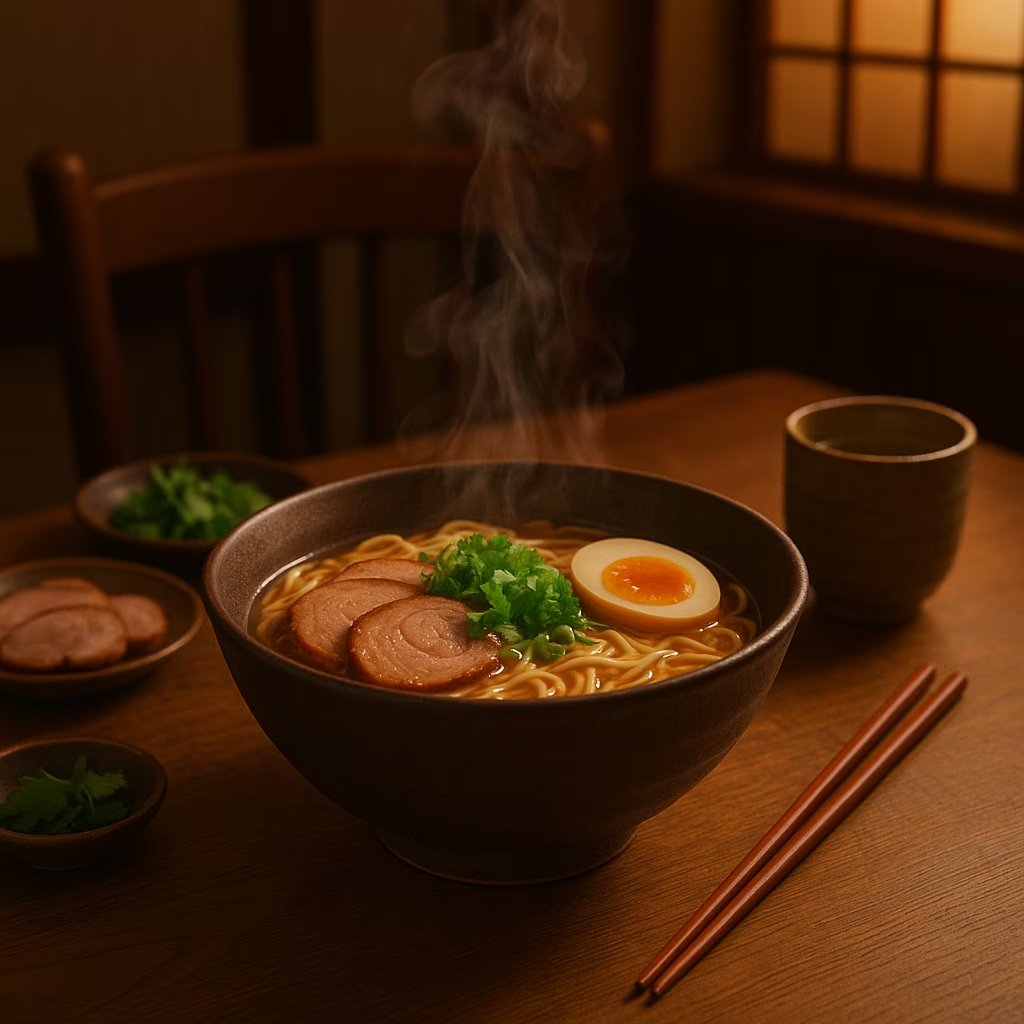
After over a dozen hours of tending, the catharsis of ladling that steaming, ivory broth over a nest of springy, alkaline noodles was unparalleled. I garnished it with the classic trinity:
-
A soft-yolked, soy-marinated egg, its yolk a golden, flowing sunset.
-
Thin slices of chashu pork belly, braised until meltingly tender.
-
A handful of finely sliced scallion greens, for a sharp, fresh counterpoint.
A final drizzle of mayu (black garlic oil) or chili-sesame paste added a glossy, aromatic finish. I took that first slurp. The broth coated my lips, rich and velvety. The noodles offered a satisfying chew. The egg yolk enriched everything it touched. In that bowl, I tasted not just pork and bone, but time, patience, and a journey that began with a humble cup of noodles and culminated in this: my own perfect, soul-warming tonkotsu ramen, crafted not in a distant shop, but right here in my kitchen, a testament to the alchemy of heat, time, and devotion.