 SoupWise
How Mara Turned a Timid Palate into a Spice-Tolerant One in Six Steps
Mara had always treated chile heat the way a sparrow treats a hawk's shadow—something to be noticed and avoided at all costs. Her partner, Leo, could toss habanero salsa onto eggs without blinking, while she needed a glass of milk after a single jalapeño nacho. When she finally decided to expand her tolerance, she discovered it was not a matter of jumping into lava, but of rewiring her palate the way a gardener slowly hardens off a seedling before planting it in full sun.
She began, as many cooks do, with the smallest possible shifts. A little extra black pepper in the mac and cheese, a scattering of crushed red pepper flakes into lentil soup. Seema Vora, a New York integrative health practitioner, often recommends spicy eating to clients for reasons such as stimulating metabolic rate and supporting healthy blood pressure. Her simplest starting trick: spike ordinary ketchup with two drops of Tabasco. Mara did exactly that, dipping sweet potato fries into the barely warmed ketchup until the heat felt less like a fire alarm and more like a soft knock on the door.
Monica Bhide, author of Modern Spice, emphasizes paying attention to tastes and aromas that make someone want another bite, while also practicing restraint. The most common mistake is using too much of a spice. Fresh spices, used sparingly, add flavor rather than punishment. Mara learned to add one spice at a time—ginger in a stir-fry, smoked paprika on roasted potatoes—so she could learn whether she actually liked it before mixing several into a muddled sauce. Her palate was a dimmer switch, not a light switch; small turns changed the room gradually.
When those small measures became familiar, she moved up a notch. Seeded, chopped chiles appeared in her tacos and grain bowls. She started with mild poblanos and cubanelles, whose heat is more of a whisper, before advancing to jalapeños and serranos. A friend who had built his own tolerance gave blunt advice: 'Be gradual, but don't be afraid to go a little too spicy sometimes. Occasional burning mouth is like exercising a muscle—no pain, no gain.' Mara learned that building heat tolerance was like teaching her tongue to wade into cold water; the first shock always felt worse than the ten seconds that followed.
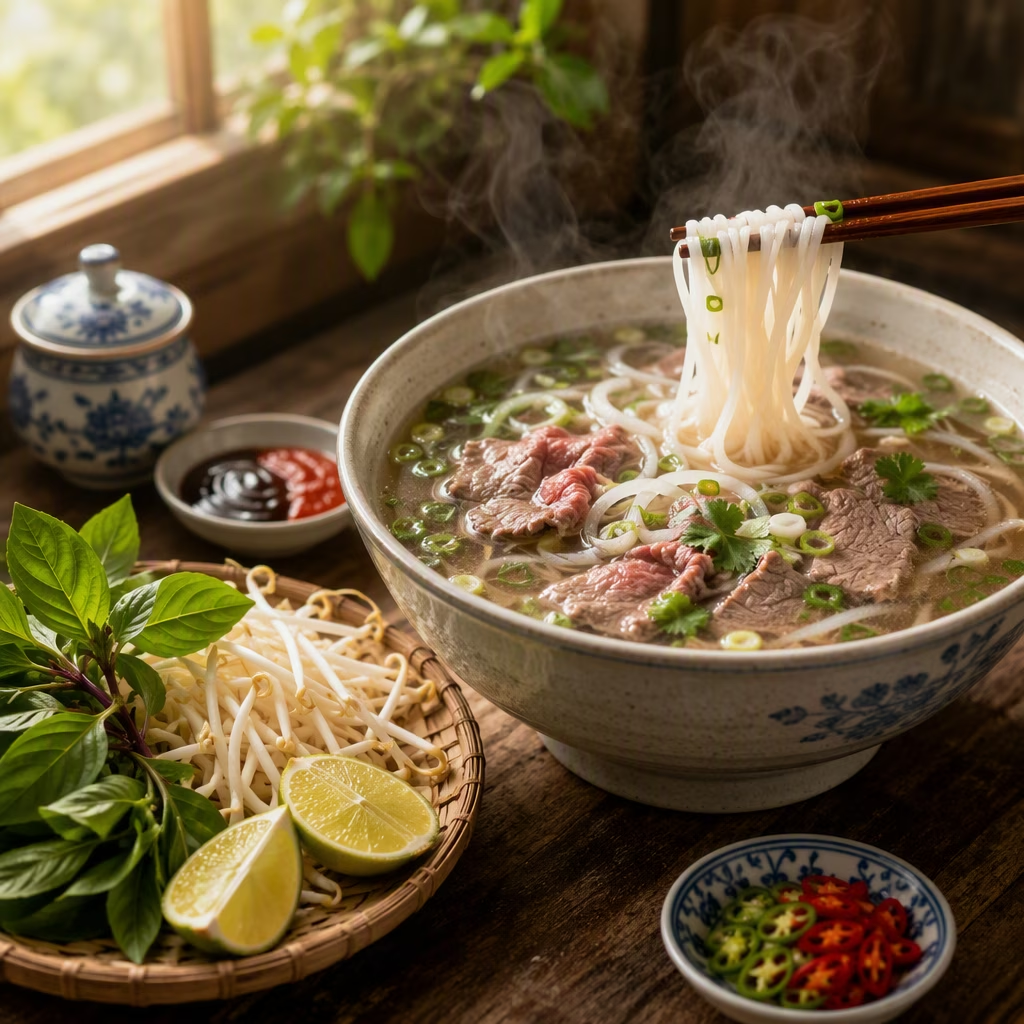
Another practical lesson came from Marie Oaks, head chef of Bosque Village in Mexico, who often cooks for groups with mixed spice preferences. Instead of making one fiery dish that alienates some guests, she serves spicy sauces or salsas on the side so each person can add to their own liking. Mara adopted this too, especially on nights when Leo wanted ghost-pepper salsa and she wanted something gentler. Keeping the heat separate meant she could practice without turning dinner into a hostage negotiation.
Then came the cooling reinforcements. Mara kept a small glass of milk nearby, or stirred a spoonful of sour cream into her salsa. Dairy products go a long way in taming spicy pain. Vora notes that many hot cuisines pair chiles with natural coolants. Thai food often leans on coconut milk, while Indian and Mexican dishes frequently include cilantro or lime, which help ease the powerful effect of heat. Mara began finishing her spicy curries with a squeeze of lime and a handful of chopped cilantro, and the fire softened into a pleasant glow.
Finally, she accepted a boundary the articles rarely mention: not every stomach is built for capsaicin. If pain arrives repeatedly after spicy meals—not the temporary mouth burn but deeper digestive distress—the only sensible move is to stop. Tolerance is not a badge that must be earned; it is a skill that can be built, but only if the body agrees.
By the end of the year, Mara could eat a serrano-spiked guacamole without panic. She described the change as something like learning to hear the bass line in a loud song—once your attention finds it, the noise becomes music. Her tolerance grew the way a river polishes a rough stone: not by force, but by thousands of small, patient currents.